Break Bulk Cargo
The complete guide to crane rigging, IMO CSS securement codes, vessel stowage plans, and freight calculations.
Managing Non-Containerized Maritime Transits
Break bulk shipping represents the traditional cargo forwarding methodology for oversized commodities that cannot be packed into standard 20ft or 40ft containers. This includes steel plates, heavy coils, machinery parts, timber logs, locomotives, and power grid transformers.
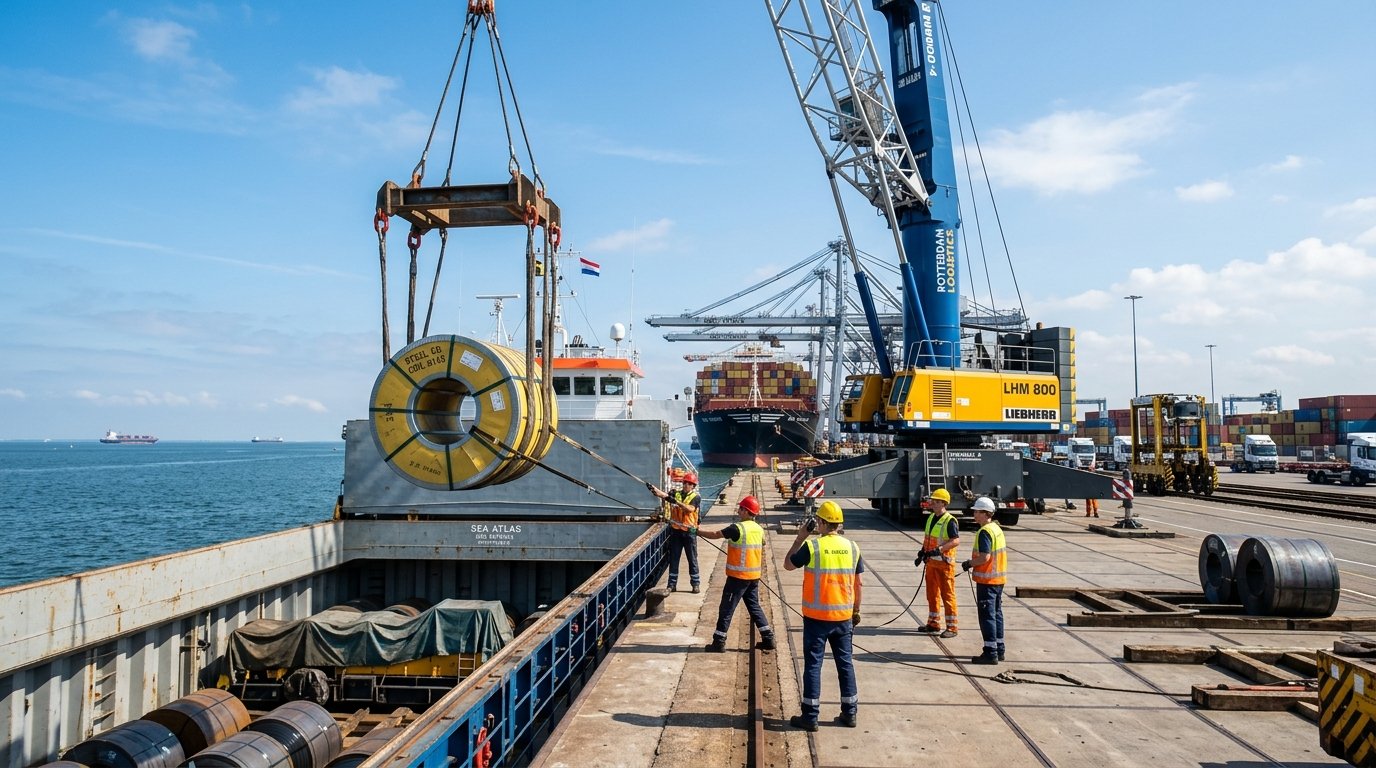
At Scan2Freight, we orchestrate all port-side rigging, heavy crane bookings, and vessel chartering procedures to guarantee safe stowage during transoceanic shipping.
Common Break Bulk Commodity Requirements
Explore the specialized handling setups required for core break bulk categories:
| Commodity | Handling Equipment | Lashing & Securing | Stowage Location |
|---|---|---|---|
| Structural Steel (H-Beams, Plates) | Spreader beams, magnets, steel slings | Wire ropes, turnbuckles, timber dunnage | Under-deck Cargo Hold (dry) |
| Hot Rolled Steel Coils | C-Hooks, coil lifters, heavy forklifts | Timber cradles, steel banding, lashing wires | Lower Hold (requires moisture control) |
| Industrial Boilers & Generators | Heavy-lift floating cranes, multi-shackle rigging | Welded stopper clips, high-tensile chains | Lower Hold or Weather Deck (under tarp) |
| Timber Logs & Lumber Packs | Vessel cranes with timber grabs / slings | Chain lashings with automatic tensioners | Deck stowage (allowable moisture) |
Port Staging & Heavy Lift Rigging Operations
Lifting heavy break bulk cargo requires careful load engineering at the terminal quay:
- Crane Staging: Coordinating Mobile Harbor Cranes (MHC) or specialized floating sheerleg cranes for single-lift capacities exceeding 100 metric tons.
- Rigging Gear Calculations: Engineering the lift with certified spreader bars, grommet slings, wire ropes, and high-load shackles to distribute load forces safely.
- Liner Terms: Clarifying freight terms under **FILO (Free In Liner Out)** or **FLT (Full Liner Terms)** to allocate loading/discharging costs clearly between shippers and carriers.
Freight Calculations: The W/M Rule
Break bulk freight rates are calculated based on the **Weight or Measure (W/M)** rule, where the carrier bills on whichever value yields higher revenue:
- Cargo Weight: 15 Metric Tons (MT)
- Cargo Volume: 32 Cubic Meters (CBM)
- Rate: $45 per Freight Ton (FT)
Since 32 CBM (Measure) > 15 MT (Weight), the cargo is billed on 32 FT.
Total Freight Cost = 32 x $45 = $1,440.
Break Bulk FAQ
Planning a Break Bulk Voyage?
Contact our project cargo division to arrange lifting plans.
Request Break Bulk Quote